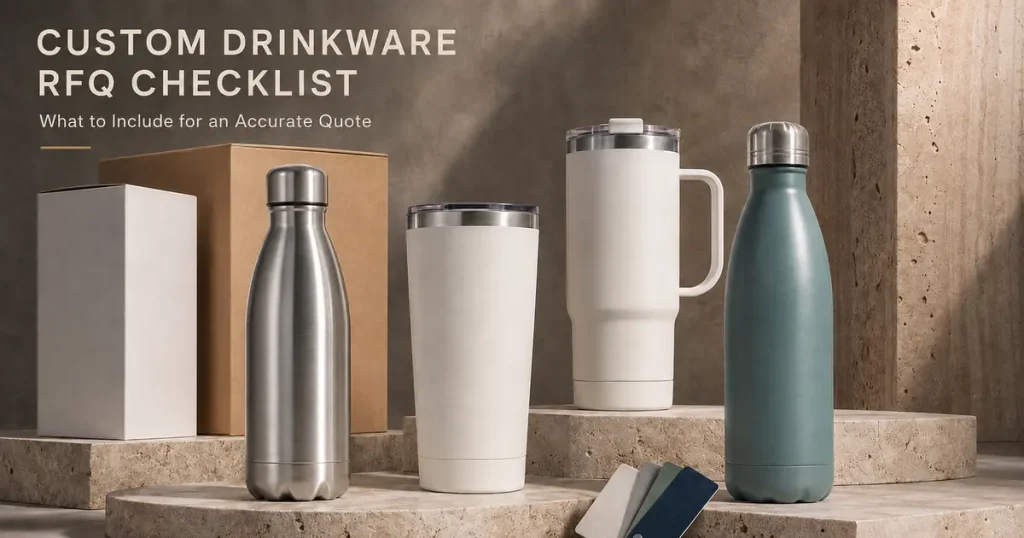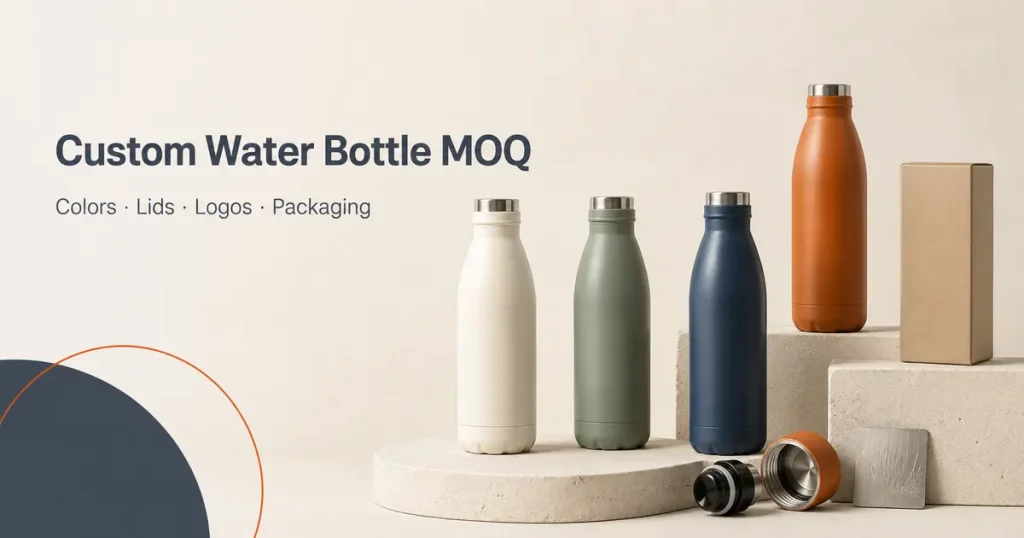
When buyers see a finished stainless steel water bottle, they usually notice the shape, color, lid, and logo first. However, the quality of the finished product is determined long before the bottle reaches the packing line.
A vacuum-insulated bottle passes through multiple forming, welding, vacuuming, finishing, decorating, and inspection stages. Each stage affects the appearance, insulation performance, lid fit, and consistency of the final order.
This guide explains a typical stainless steel water bottle manufacturing process and highlights the production details that matter most in an OEM or private-label project. The exact process may vary according to the bottle design, construction, and customization requirements.
See the stainless steel bottle manufacturing process in action
The video below shows selected production stages filmed at one of our long-term manufacturing partners, including bottle-body forming, surface finishing, logo decoration, and final inspection.
1. Selecting the stainless steel material
The process begins with the material specification. Grade 304 stainless steel, often described as 18/8 stainless steel, is commonly used for the food-contact inner wall of reusable drinkware. Other grades or material combinations may be selected according to the product design, target price, and market requirements.
Material selection should not be judged by the grade name alone. Thickness, consistency, and suitability for forming also influence the strength, weight, and production stability of the bottle.
For an OEM project, the material specification should be confirmed before sampling and clearly recorded in the product specification.
2. Forming the inner and outer bottle shells
Most vacuum-insulated bottles have two stainless steel layers: an inner shell that holds the beverage and an outer shell that forms the visible bottle body.
The stainless steel is shaped through a series of forming operations. Several stages may be required before the inner and outer shells reach the correct height, diameter, and profile. The edges are then trimmed so the parts can move to the next production stage.
Consistency during forming is important because early dimensional differences can affect:
- Overall bottle shape
- Capacity and body dimensions
- Neck alignment
- Lid compatibility
- Surface finishing
- Consistency between production batches
A small variation in the body may become more visible after polishing, coating, or final assembly.
3. Shaping and trimming the bottle neck
The neck and opening must be formed accurately to match the selected lid structure. Depending on the design, this stage may involve necking, trimming, threading, or forming the lip of the bottle.
The opening diameter and neck dimensions affect how the lid, thread, and silicone gasket work together. If these parts do not match correctly, the product may have an uneven appearance, poor lid engagement, or leakage risk.
This is why the bottle body and lid should be evaluated as one complete system during product development, rather than as two separate components.
4. Joining the double-wall structure
After forming, the inner and outer shells are assembled and joined. Welding is used to connect critical areas and create the double-wall bottle structure.
Welding quality influences both the appearance and functional reliability of the bottle. The joined parts must remain properly aligned, and the sealed structure must be suitable for the following vacuum process.
Different bottle designs may use different assembly methods, so the production route should match the approved construction of the product.
5. Creating the vacuum insulation
The space between the inner and outer stainless steel walls is processed to create a vacuum. Removing air from this space reduces heat transfer and allows the bottle to keep beverages hot or cold for longer.
Once the vacuum has been created, the structure must be sealed correctly. Some bottle constructions may also use an additional heat-reflective treatment to improve thermal performance.
Although two bottles may look almost identical from the outside, differences in their internal construction, vacuum stability, and process control can result in different insulation performance.
Insulation should therefore be evaluated through testing, not by appearance alone.
6. Checking the bottle before decoration
Functional issues are easier to address before the bottle receives its final color and logo. Depending on the product and agreed-upon quality standard, semi-finished bottles may be checked for dimensions, workmanship, vacuum performance, or other construction-related requirements.
This stage helps prevent unsuitable semi-finished bottles from continuing into coating and decoration, where additional processing time and cost would already have been added.
7. Preparing the stainless steel surface
Before coating or decoration, the bottle surface must be cleaned and prepared. The exact treatment depends on the desired finish and may include polishing, cleaning, or other surface-preparation processes.
Proper preparation helps produce a cleaner, more uniform finish and improves the consistency of later coating and printing.
Common surface options include:
- Polished stainless steel
- Powder coating
- Spray painting
- Gradient color finishes
- Textured or special decorative effects
The right finish should be selected according to the intended use, visual design, target price, and durability requirements of the project.
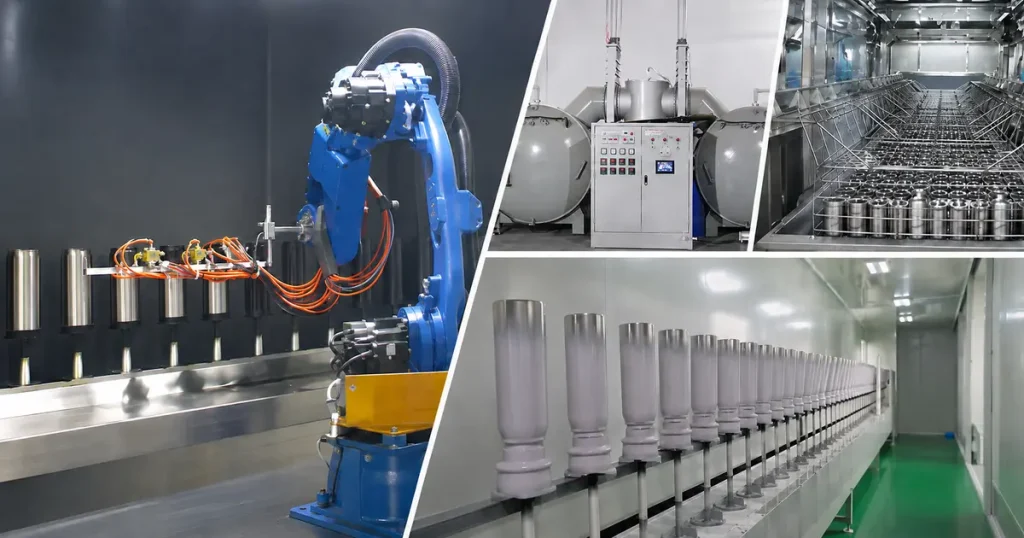
8. Applying the color finish
For a colored bottle, the coating must be applied evenly and controlled across the production batch. Color consistency can be influenced by the coating material, application process, curing conditions, bottle shape, and approved color standard.
An attractive pre-production sample is important, but mass-production consistency is the real test. Buyers should confirm the approved color reference and clearly define any special finish requirements before bulk production begins.
When several colors are included in one order, each color should be checked separately because different pigments and finishes may behave differently during production.
9. Adding the custom logo and decoration
Logo decoration turns a standard bottle into a branded product. Common decoration methods for stainless steel drinkware include:
- Silk-screen printing
- Laser engraving
- Heat-transfer printing
- UV printing
- Full-wrap printing
The most suitable method depends on the bottle surface, artwork, number of colors, order quantity, and desired visual effect.
Logo size and placement should be confirmed on an approved sample or artwork before mass production. For large orders, production control is needed to keep the logo position, color, and printing quality consistent across the full batch.
10. Assembling and checking the lid and accessories
A stainless steel bottle is not complete without its lid and sealing components. Depending on the design, the lid may include a silicone gasket, straw, spout, handle, button, slider, or other moving parts.
These components need to be assembled correctly and checked together with the bottle opening. Lid fit, thread engagement, gasket placement, and moving-part function can all affect the user experience.
Not every lid is designed to meet the same leak-resistance standard, so the intended use and testing requirement should be confirmed during product development.
11. Quality inspection before packing
Before packing, finished bottles are inspected according to the agreed product specification and quality standard. Inspection items may include:
- Surface appearance and workmanship
- Color consistency
- Logo size, position and printing quality
- Bottle dimensions and capacity
- Lid fitting and functional operation
- Silicone gasket and accessory assembly
- Leakage performance
- Insulation performance
- Packaging and shipping marks
The exact inspection plan depends on the bottle design, order requirements, and agreed-upon testing method.
For an OEM stainless steel bottle project, producing one attractive sample is only the beginning. The greater challenge is repeating the approved result consistently across hundreds or thousands of units.
12. Packing the finished bottles
After inspection, the bottles are cleaned and packed according to the confirmed packaging specification. Options may include protective bags, tissue paper, individual white boxes, custom-color boxes, inserts, dividers, and export cartons.
Packaging is not only about presentation. It must also protect the surface finish, lid, and accessories during handling and international transportation.
Custom packaging usually requires separate artwork confirmation, and its minimum order quantity may differ from the bottle quantity. Buyers should therefore discuss packaging early in the project rather than waiting until production is almost complete.
Why the manufacturing process matters to buyers
Two stainless steel bottles can have a similar capacity, shape, and color but perform very differently in actual use. A product photo cannot show vacuum stability, welding quality, lid compatibility, coating consistency, or the inspection standard behind the finished bottle.
Stable manufacturing helps reduce differences between the approved sample and the bulk order. It also makes quality control, packaging, and delivery planning more predictable.
When comparing quotations, buyers should look beyond the unit price and confirm:
- Stainless steel grade and construction
- Bottle capacity, dimensions and weight
- Lid material, structure and sealing design
- Required insulation and leakage tests
- Surface finish and approved color reference
- Logo method, size and position
- Individual packaging and carton requirements
- Sample approval and inspection standards
Clear specifications allow suppliers to quote on the same basis and help prevent misunderstandings later in production.
Frequently asked questions
What stainless steel is commonly used for water bottles?
Grade 304 stainless steel is commonly used for the food-contact inner wall of reusable bottles. Grade 316 or other constructions may be specified for particular projects. The complete material structure should always be confirmed in the product specification.
How does a stainless steel bottle keep drinks hot or cold?
A vacuum-insulated bottle has an inner wall and an outer wall with a vacuum space between them. This structure reduces heat transfer and helps maintain the beverage temperature for longer.
Can the bottle color, lid, logo, and packaging all be customized?
Yes. Available customization depends on the bottle design, selected process, order quantity, and supplier capability. Body color, logo decoration, lid details, and packaging may also have different minimum order quantities.
Why should buyers approve a sample before mass production?
The sample provides a reference for the bottle structure, color, logo, lid function, and packaging. Clear sample approval and written specifications give both sides a consistent standard to follow during production and inspection.
Work with Funzlife on your custom drinkware project
This manufacturing video was filmed at one of our long-term production partners. Funzlife works with selected manufacturing partners specializing in different stainless steel drinkware categories.
We support promotional, retail, and private-label customers with product sourcing, drinkware customization, sample development, production follow-up, and quality coordination.
Planning a custom stainless steel water bottle project? Send us your preferred bottle style, quantity, logo, and packaging requirements. Our team will help you evaluate the available options and prepare a detailed quotation.